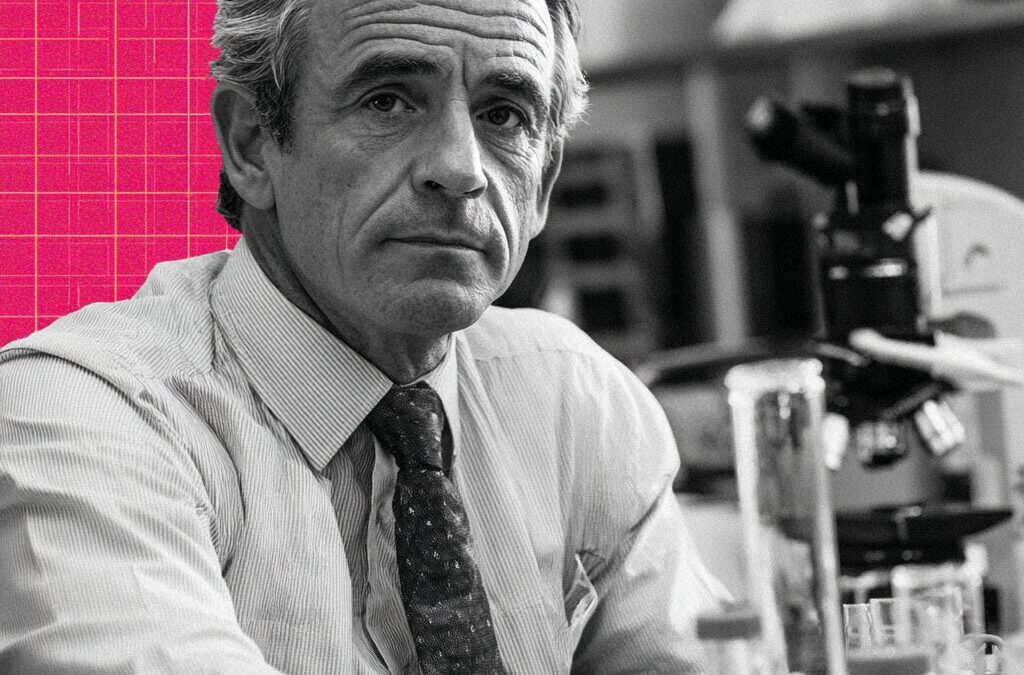
Rebellion in the Lab: RFK Jr.’s Health Overhaul Faces Fierce Pushback from Scientists
Key Areas of Conflict
Below are the main domains in which RFK Jr.’s administration and proposals are clashing with the scientific and public health community.
1. Vaccine Policy, Advisory Panels & Institutional Trust
One of the most contentious fault lines is vaccination policy and the role of expert advisory bodies.
-
Dismissal of ACIP / CDC vaccine panel members
In a sweeping move, Kennedy removed all 17 members of the CDC’s Advisory Committee on Immunization Practices (ACIP), which provides scientific and clinical guidance on vaccine schedules in the U.S. Critics say this risks politicizing vaccine policy and undermining continuity and trust. Center for American Progress+3The Guardian+3Harvard Public Health+3
Some newly appointed or considered members reportedly lack evident expertise in vaccines, infectious disease, or clinical trials, which raises concerns about politicization of what had been a technically grounded body. Harvard Public Health -
Rescinding or weakening recommendations for COVID-19 vaccination in pregnant women and children
Under Kennedy, federal stance shifted away from robust endorsements of COVID-19 vaccination in pregnant women and healthy children. Some health experts viewed this as dangerously loosening the safety nets around at-risk populations. Newsweek+1 -
Resignations of top advisers
Following policy shifts and internal pressures, a prominent CDC COVID-19 vaccine adviser resigned, citing inability to reconcile her professional responsibility with the new direction. The Washington Post -
Accusations of undermining vaccine confidence & promoting misinformation
Many scientists view Kennedy’s previous and current rhetoric around vaccines — including questioning vaccine safety or promoting alternative theories — as a serious threat to public trust in immunization. The Lancet editorial warned that his promotion of debunked claims reflected a “troubling disregard for science.” The Lancet
The American Progress / public interest community has labeled his actions a systematic attempt to erode vaccine science. Center for American Progress
2. Scientific Integrity, Publication Control, and Institutional Reshaping
Kennedy’s approach to scientific institutions, journals, and the flow of research has sparked sharp criticism:
-
Threatening to ban publishing in top medical journals
Kennedy has publicly said he may forbid NIH-funded scientists from publishing in high-profile journals such as The Lancet, NEJM, and JAMA, calling them “corrupt” and “influenced by pharma.” He proposes that government agencies publish their own in-house journals instead. Clinical Advisor+3The Washington Post+3STAT+3
This has been met with alarm: critics argue it would delegitimize taxpayer-funded research and isolate U.S. science from global peer-review norms. The Washington Post+2The Guardian+2 -
Questionable scholarship, citation errors, and fabricated studies in his flagship reports
The administration’s Make America Healthy Again (MAHA) report, touted as a foundational health strategy, has been challenged by investigations revealing use of nonexistent studies, data mischaracterization, and possible AI-generated citations. The Guardian+2The Washington Post+2
Some of these revelations led to corrections, but the episode has weakened confidence in the evidentiary basis of Kennedy’s proposals. The Washington Post+2The Guardian+2 -
Restructuring and staff reductions in HHS / agency weakening
Critics argue that Kennedy’s administrative moves — cutting staff, reorganizing HHS function, and defunding programs — are not just management choices but strategic dismantling of institutional checks and balances. The American Public Health Association has publicly warned these moves could “weaken our nation’s ability to meaningfully address any health problem.” American Public Health Association
The removal of HHS’s top FDA vaccine leader, Dr. Peter Marks, further raised alarms about direction and fidelity to science. American Public Health Association+1
3. Autism, Acetaminophen, and Causality Debates
Another flashpoint is Kennedy’s advocacy around autism causation theories and environmental exposures.
-
Linking infant circumcision, Tylenol (acetaminophen), and autism
In a cabinet meeting, Kennedy proposed that boys who had circumcision and were given Tylenol might have double the risk of autism. This theory was widely criticized. Dr. Peter Hotez, a respected vaccine expert, branded the claim “absurd” and said it ignored established genetic and environmental research. Houston Chronicle
Kennedy has said he will commission new studies to “make the proof.” People.com -
Pushback from autism advocacy organizations
The Autism Society of America issued a statement condemning claims that environmental exposures or medications are primary drivers of autism, warning that such narratives stigmatize and mislead. Autism Society -
Historical context & prior controversies
Kennedy’s prior activism around vaccines and his book The Real Anthony Fauci already drew scrutiny for promoting links between vaccines, public health policy, and autism — positions largely rejected by mainstream scientists. Wikipedia+3Brookings+3NBC New York+3
4. Funding Shifts, Vaccine & mRNA Policy, and Public Health Risk
Kennedy’s decisions on funding priorities have also provoked debate and concern:
-
Cuts to mRNA vaccine research funding
Under his leadership, nearly half a billion dollars in federal funding intended for vaccine development was canceled. This move has been called “one of the most dangerous public health decisions ever” by experts, given mRNA’s promise in future pandemics and rapid vaccine development. PBS -
Labeling biotech concerns and industry pushback
A reportedly leaked industry memo labeled Kennedy as a “direct threat to public health,” pointing to worries in biotech about policy disruption, regulatory uncertainty, and public messaging on vaccines. (Although the trade group later denied authorship). STAT -
Changing vaccine advisory composition
Kennedy has considered appointing vaccine critics to key vaccine advisory panel seats (e.g. ACIP), which could shift recommendation frameworks toward skepticism. The Washington Post -
Measles outbreak responses & public messaging
Amid a measles outbreak in the Southwest U.S., Kennedy’s handling and public statements — such as downplaying the outbreak — came under fire from health experts who argue his stance undermines urgency in a preventable disease crisis. Wikipedia
5. State-Level Nutrition, Food Safety, Wellness Policies & Ideology
Kennedy’s agenda also includes controversial proposals around food, nutrition, and alternative health narratives — which clash with prevailing scientific consensus:
-
Deregulating raw milk, removing fluoride from water, challenging vaccine safety
In commentary and in published proposals (e.g. via his health agenda), Kennedy has supported deregulation of raw milk, elimination of fluoride in public water systems, and further scrutiny of vaccine safety — all positions seen by many public health experts as scientifically unsound or high-risk. Medscape -
Focus on “big food,” seed oils, chronic disease prevention
Kennedy has argued that processed food industries, seed oils, and pharmaceutical influence have driven chronic disease epidemics. Some experts concede that losing corporate influence is a valid critique — but they question whether Kennedy’s proposed policies lean more toward ideology than evidence-based intervention. Health Policy Watch+2Yale Daily News+2 -
Concerns over pseudoscience or wellness product influence
Critics warn that some of Kennedy’s policy proposals mirror wellness culture movements, risking blending scientifically grounded health policy with less rigorous wellness or “alternative health” concepts. McGill University+1
🧩 Underlying Tensions & Broader Implications
Many of the debates above stem from deeper conflicts over:
-
Who defines scientific legitimacy
Kennedy’s challenges to peer-reviewed journals, traditional advisory bodies, and scientific consensus reflect a clash over who has the authority to say what’s “true.” -
Public trust vs. institutional trust
His critiques of “pharma conflicts of interest” resonate with skepticism toward institutions. But scientists worry that undermining trust in public health agencies could lead to greater fragmentation, misinformation, and erosion of consensus. -
Prevention vs. treatment emphasis
Kennedy casts himself as a reformer focusing on root causes of chronic disease, rather than spending on treatments. While prevention is widely supported in principle, many critics say his plans lack evidence-based rigor, risk misprioritizing, and could displace essential services. -
Ideological framing over pragmatic policy
Many public health experts argue that parts of Kennedy’s agenda prioritize ideological stances (e.g. distrust of pharmaceutical influence, expansion of wellness narratives) over rigorous policy design, possibly deterring buy-in across political and scientific communities. -
Scientific independence vs centralized control
Moves to restructure publication pathways, suppress dissenting voices, or centralize scientific narratives raise alarms about politicization, censorship, or ideological capture of health institutions.
🧭 Where the Fault Lines Might Lead
Depending on how these tensions play out, here are possible trajectories:
-
Legal and congressional pushback
Scientists, states, and advocacy groups may litigate or use oversight mechanisms to block or roll back controversial policy changes. -
Public health agency fractures or resignations
Already, notable resignations and undermined morale are signals of internal strain. Further erosion of institutional capacity or staff may occur. -
Policy vacuums, health crises, or resurgence of preventable disease
Weakening vaccine infrastructure or losing scientific coherence during outbreaks could result in setbacks — e.g. measles or other vaccine-preventable diseases gaining ground. -
Reinforced opposition from scientific community and civil society
Calls for Kennedy’s removal from office or increased oversight by professional public health associations, such as “Defend Public Health,” are already active. The Guardian -
Shifts in public opinion
If controversies deepen and science-based critiques gain traction, public support may erode — especially during health emergencies when confidence in institutions becomes paramount.